

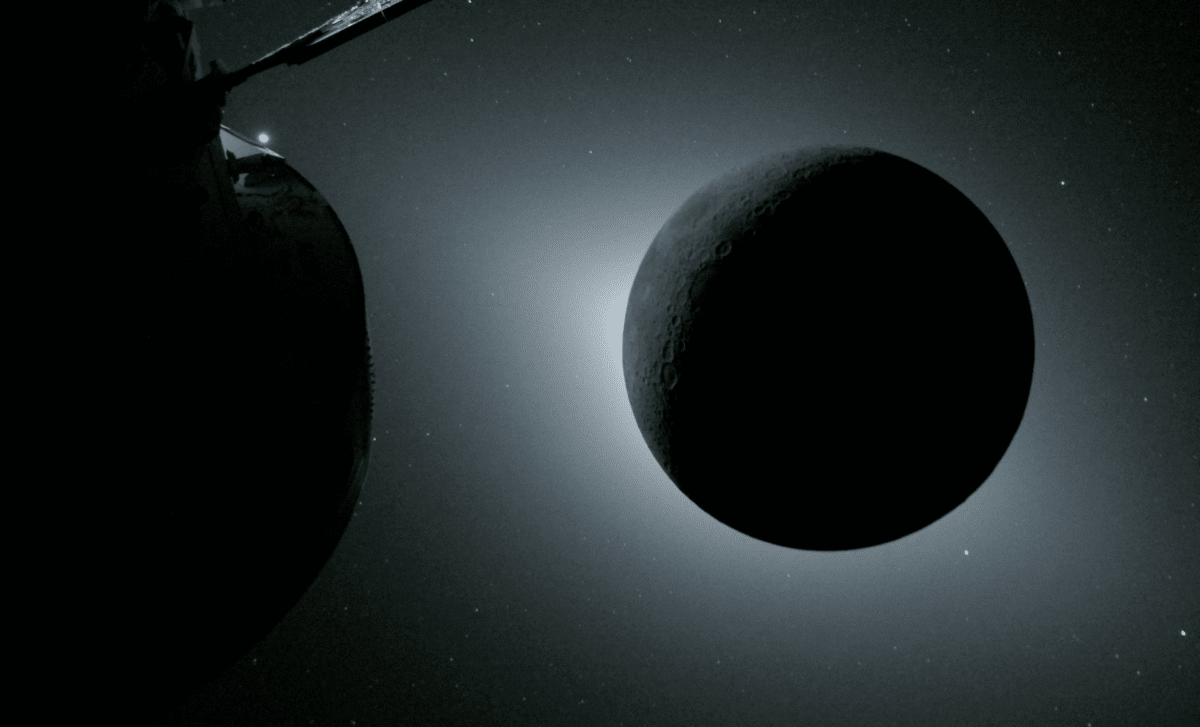
Here is Commander Reid Wiseman from the Artemis II space mission on seeing the moon create a solar eclipse:
It’s just indescribable. No matter how long we look at this, our brains are not processing this image in front of us. It is absolutely spectacular, surreal... there’s no adjectives, I’m going to need to invent some new ones, there’s absolutely no words to describe what we are looking at out this window.
Now, I would never dare to challenge Commander Wiseman on physics, aeronautical engineering, nor how to live in a cramped space for a week with three other people when the toilet is malfunctioning.
But adjectives? That’s my territory.
And he’s wrong. There are ALWAYS adjectives. New ones are being formed every second from dense, gaseous clouds of verbiage. There are as many adjectives as planets in the known universe.
A better question: is there any life in those adjectives?
Surveying the adjectives people did use to describe the mission, you see an almost lunar barrenness. Wiseman (before he gave up) went for spectacular and the epithet du jour, one speeding away from its original meaning at an alarming rate, surreal. We’ve also had unreal, amazing, indescribable and extraordinary.
To describe the way the mission was described, just go to any travel editor’s desk. Above it will be a list of banned words. As well as the above, they’ll likely include breathtaking, spectacular and jaw-dropping. Regular readers will know the one at the top of my own list, although I guess even the most depraved users of that tired, all-purpose adjective would hesitate to describe the dark side of the Moon as vibrant.
I bet for Commander Wiseman, navy test pilot with a Masters in system engineering, the most arduous part of the training was not being held incommunicado in an underground cave, nor getting whizzed around in one of those crane arm things, but the hour he was forced to spend with NASA’s PR people deciding what to say to listening audience of billions back on Earth.
And I can only imagine his relief when one of the bright young things from Comms said – ‘I know! Just say it’s indescribable. There are no adjectives.’
And while we are thinking about possible other worlds, as we do whenever there is a mission like this, I got to thinking: what would a world without adjectives be like?
Exercise one: AI, write an article without adjectives
A great hero of this blog is László Almásy, the titular character in Michael Ondaatje’s novel The English Patient. When Katharine Clifton, played by Kristen Scott-Thomas first meets László (Ralph Fiennes), she congratulates him on writing a long momolgue without a single adjective.
‘A thing is still a thing no matter what you place in front of it,‘ Almásy replies.
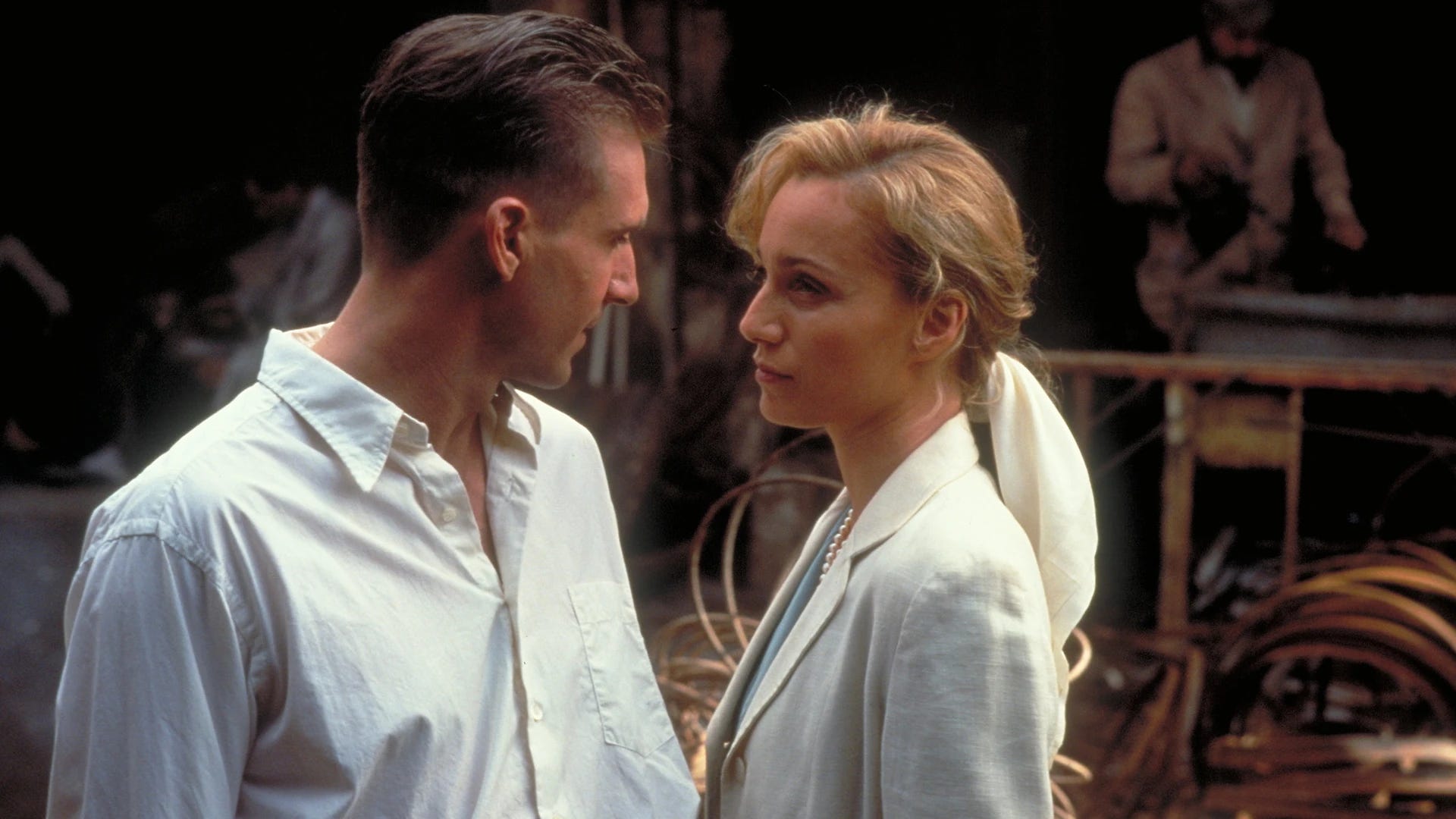
You look…um, what’s the word?
Impressed by this, I sought out my pal Claude.
I had a whole load of articles to write about a subject unfamiliar to me. I also had the blessing of the commissioning person to deploy AI if necessary. Claude’s first attempts were okay, but padded out with loads of decorative words. He grumbled a bit when I asked for the László version – an article without adjectives – but eventually (ie in about four seconds) he obliged. The new version had a lot more substance. It was almost useful, though out of professional pride I didn’t do the command + C thing on the AI text.
Still, it’s a route I’d recommend to the increasing number of writers relying on Claude and his friends. Without the empty calories of adjectives, they have to give you real substance. Next, I plan to deny Claude adverbs and abstract nouns too.
On AI, I have a different theory every week.
My latest goes like this. AI copy is like a ready meal you buy from the supermarket. It’s fine – a very decent approximation of the real thing. You might even serve it up at a dinner party and hope no–one notices the difference.
You still know you are cheating, however. And whereas real cooking/writing, for all its frustrations and disappointments, is bound to get your endorphins going, the same cannot be said for the ping of the microwave or the AI ‘job done’ alert.
That said, I asked Claude to write this article for me and he said “I now have a solid sense of the Forthwrite (Mark Jones / “No-nonsense words”) Substack style: crisp, journalistic, self-aware, full of sharp examples, opinionated without being preachy, leavened with wit and the occasional literary or celebrity reference, and deeply committed to the idea that nouns and verbs do the real work.”
Thanks for your nice words, Claude. That almost makes up for you ripping me off.
PS this is NOT written with AI.
Exercise 2: Write your Linked In profile without adjectives
I seem to have done this with mine without really thinking about it. I guess I thought people would be more interested in what I’d done/am doing than fancy words describing how I’d done it.
Mind, if I WERE to do that in the accepted Linked I way, it would probably read:
Passionate, committed editor and writer with an unparalleled career in consumer magazines, travel writing and content marketing. MJ has enjoyed a stellar career since graduating from one of our top universities. He is fanatical about grammar and has a profound and lasting love for the English language.
The more accurate version might read:
Headstrong writer and grammar geek with more than a bit of ego who can write a bit. Fluked his way into Cambridge, became something of a high flyer in his 20s, before getting sacked from successive jobs through emotional immaturity and stubbornness. Creatively, has had a couple of good ideas, among all the unrealistic and misplaced ones. Ultimately achieved a basic level of competence in managing people and projects before deciding he never wanted to work in an office again.
I also asked Claude to make me a new Linked In profile picture…and it came up with Philip bloody Larkin
Mr Townshend’s English lesson
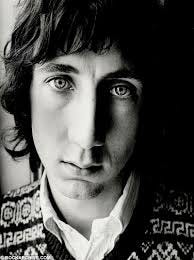
While I was thinking about this blog about adjectives, I listened to one of my favourite podcasts, Andrew Hickey’s History of Rock Music in 500 Songs. The latest one, number 183, is about Pinball Wizard by The Who and the band’s leader/guitarist/writer, Pete Townshend.
The song is about Tommy, the hero of Townshend’s rock opera of the same name. A traumatic incident in childhood leads Tommy to lose his sight, hearing and voice. Townshend wanted him to be redeemed as a kind of guru figure. Originally, Tommy was going to be a rock star, but Townshend instead channelled a favourite pastime of his mod clan, the pinball machine.
The refrain goes:
That deaf, dumb1 and blind kid
Sure plays a mean pinball.
Four adjectives there, three describing Tommy’s state, the fourth his skills at pinball.
(I’ll note in passing how London-born Townshend uses a distinctly American phrases: ‘sure’ and ‘mean’. That may be because post-war British teenagers liked to ape American ways of speaking. It might also be because The Who had a huge following in the States).
My basic rule about adjectives is, the writer has to earn them. Show what goes into making this thing good, beautiful, spectcaular, vibrant etc, then if neccessary, you can use the adjective.
That’s exactly what Pete Townshend does. A kind of Greek chorus sets the challenge
How do you think he does it?
I don’t know
What makes him so good?
The narrator (a brilliant pinball player who has been eclipsed by Tommy) explains it.
He stands like a statue, becomes part of the machine
Feeling all the bumpers, always playing clean
Plays by intuition, the digit counters fall
That deaf, dumb and blind kid
Sure plays a mean pinball.
I don’t know much about pinball, but what I do comes from the song. Apart from the questionable claim in a later verse that he ‘plays by sense of smell’, you get a pretty good idea of what it takes to be a pinball wizard – and a good storyteller.
It may be true that I overthink pop music lyrics a bit.
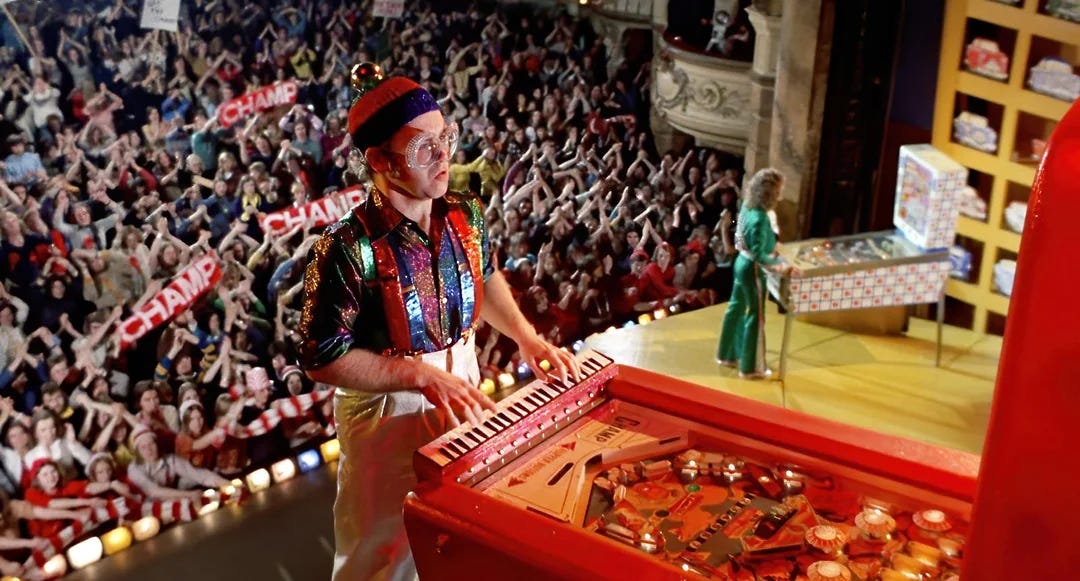
Elton v Tommy (Roger Daltry) in the Tommy film
Revealed: the secret Artemis II script
You’ll have noticed that the brave Artemis astronauts had President Donny Trump on the spacephone at one point. They looked a bit embarrassed. The whole thing was pretty awkward, but they managed to stay calm and polite.
I’ve since unearthed the script they were meant to read out, but ditched at the last minute:
“Mr President, thank you for your comments and your observation that the USA is the hottest country in the world right now. Well, it’s certainly getting hotter all the time. We might be able to say how much hotter thanks to NASA’s Orbiting Carbon Observatories. But your administration is pushing to have that programme shut down. I guess if you don’t like the evidence, the easiest thing to do is shut down the source of the data.
Maybe you’d prefer to rely on Minnesota Republican Mary Franson, who said her faith is ‘not in scientists dictating what we should and should not do to save the environment’ and it’s a ‘commie scam’.
Still, we have made this historic journey thanks to the efforts of SCIENTISTS. You might have heard of them, although getting to meet any might prove harder and harder. There are certainly not many in your own team. Meanwhile, a 2025 poll says 75 percent of researchers in the US are considering leaving the country.
But don’t worry! We can still land on the Moon, get to Mars and colonise Jupiter. Just ask God to sort it out. As another of your team said on climate change, we’ll “we’re gonna leave [complicated stuff like this] in the hands of a much, much higher authority.”
For the avoidance of doubt, she meant God, not you”.
Hickey, a great fellow for trigger warnings, said he was obliged to extract this word for ‘mute’, even if it may be deemed offensive these days.